Medicare Programs
Remote Therapeutic
Monitoring
Therapy outcome monitoring for musculoskeletal and respiratory conditions
- MSK and respiratory therapy tracks
- Available to PTs, OTs, and SLPs
- Self-reported + device data accepted
Overview
What Is Remote Therapeutic Monitoring?
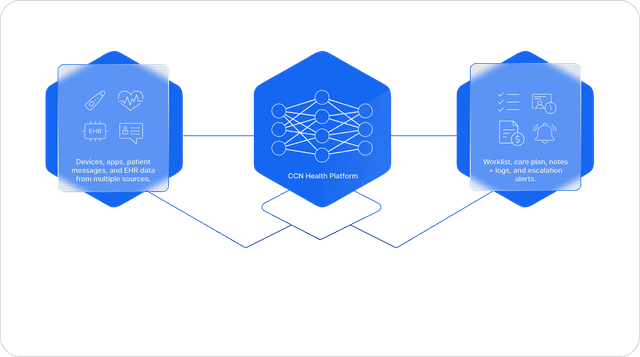
RTM enables clinicians to monitor non-physiologic data — therapy adherence, pain levels, medication response, and functional status — using FDA-cleared devices or software. Unlike RPM (physiologic data), RTM is designed for respiratory and musculoskeletal therapy outcomes.
- Pain assessment and range of motion tracking
- Exercise compliance monitoring
- Therapy adherence with automated reminders
- Functional status progression scoring
72
Heart Rate
bpm
16
Resp Rate
br/min
Yes
Presence
In Bed
Eligibility
Qualifying Conditions
RTM covers therapy-based conditions across two tracks — musculoskeletal rehabilitation and respiratory therapy.
Total Knee Replacement
Z96.65xMSKTotal Hip Replacement
Z96.64xMSKRotator Cuff Repair
M75.1xMSKCOPD Rehabilitation
J44.xRespiratoryChronic Pain
G89.xMSKHow It Works
From Enrollment to Billing
A four-step workflow designed for therapy outcome tracking and compliant monthly billing.
Enroll & Setup
Device or software provisioning, patient education on self-reporting therapeutic outcomes, and consent documentation.
Daily Therapy Data
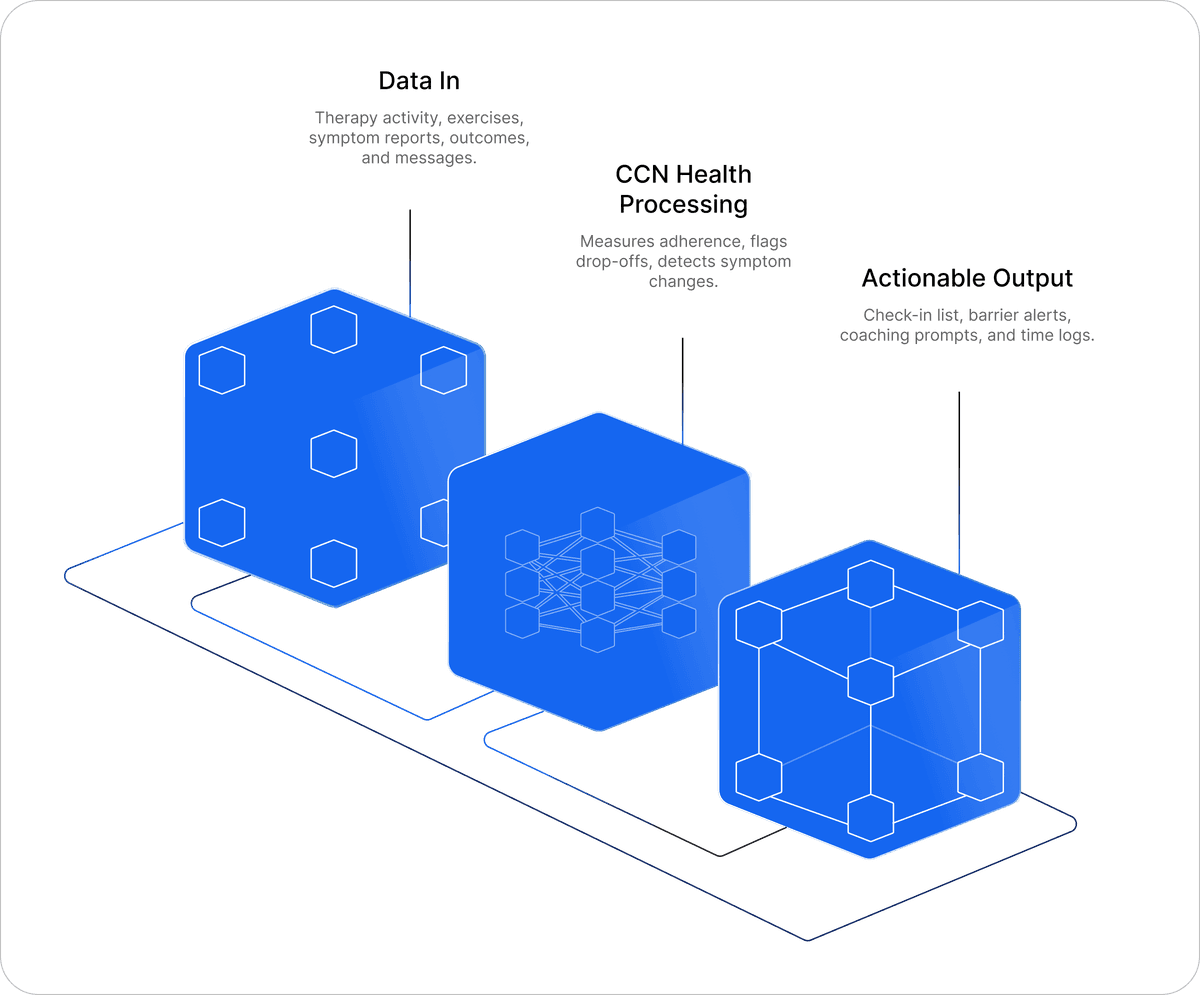
Collect 16+ days of therapeutic data per 30-day period — pain scores, range of motion, exercise compliance, and medication adherence.
Clinical Review
Therapy adjustments based on monitoring data, with interactive communication between clinician and patient each month.
Monthly Billing
Bill the appropriate track — MSK (98977) or respiratory (98976) — plus treatment management codes for clinical review time.
Platform
SpO2 & Respiratory Monitoring
For the respiratory therapy track, monitor oxygen saturation and respiratory function to track COPD rehabilitation progress and therapy effectiveness.
- Continuous SpO2 trending
- Respiratory rate monitoring
- Therapy adherence scoring
- Exacerbation early warning
95-100%
Normal
90-94%
Low
<90%
Critical
Dorothy H.
97% SpO2 · 74 bpm
Frank M.
91% SpO2 · 88 bpm
Nancy R.
95% SpO2 · 70 bpm
Arthur J.
88% SpO2 · 96 bpm
Ruth B.
98% SpO2 · 66 bpm
2
Therapy Tracks (MSK + Resp)
16+
Days of Data Required
5
Billable CPT Codes
$130
Avg Monthly Per Patient
Revenue
CPT Codes & Billing
Five dedicated CPT codes covering setup, device supply for each therapy track, and clinical treatment management.
Remote Therapeutic Monitoring Setup & Patient Education
Initial setup and patient education on the use of remote therapeutic monitoring equipment or software. Covers device or application provisio...
~$19.32one-time
Remote Therapeutic Monitoring Device Supply — Respiratory System
Supply of a remote therapeutic monitoring device for respiratory system monitoring with scheduled recordings or programmed alerts. Requires ...
~$55.72/mo
Remote Therapeutic Monitoring Device Supply — Musculoskeletal System
Supply of a remote therapeutic monitoring device for musculoskeletal system monitoring with scheduled recordings or programmed alerts. Requi...
~$55.72/mo
Remote Therapeutic Monitoring Treatment Management — First 20 Minutes
Clinical time spent reviewing, interpreting, and acting on remote therapeutic monitoring data. Requires a minimum of 20 minutes of interacti...
~$50.94/mo
Remote Therapeutic Monitoring Treatment Management — Each Additional 20 Minutes
Each additional 20 minutes of clinical time spent on RTM treatment management beyond the initial 20 minutes billed under 98980. Cannot be bi...
~$42.22/mo
Important billing rule: Only one of 98976 (respiratory) or 98977 (MSK) can be billed per patient per 30-day period. Select the device supply code matching the patient's primary therapy track.
Why CCN Health
Built for Therapy-Based Monitoring
Purpose-built workflows for the unique requirements of RTM — dual therapy tracks, broader provider eligibility, and self-reported data support.
Dual Therapy Tracks
Separate musculoskeletal and respiratory workflows with track-specific documentation, outcome measures, and billing code selection built into each pathway.
PT/OT/SLP Billing
RTM is available to a broader range of providers than RPM — physical therapists, occupational therapists, and speech-language pathologists can order and bill RTM services directly.
Self-Reported Data
Unlike RPM, RTM accepts patient-reported outcomes collected through FDA-cleared software. Pain scales, symptom surveys, and therapy logs all qualify as valid data sources.
Digital Therapeutics
Software-based monitoring expands beyond hardware devices. FDA-cleared mobile apps, digital therapeutics platforms, and patient-facing survey tools all qualify as RTM devices.
Outcome Tracking
Functional progression scoring, pain trending over time, and range-of-motion benchmarks give clinicians a data-driven view of therapy effectiveness between visits.
RPM/RTM Coordination
Stack both programs for qualifying patients — RPM for physiologic data (SpO2, weight) and RTM for therapeutic data (pain, adherence) — maximizing reimbursement per patient.
Compliance
Common Pitfalls & Compliance Notes
RTM billing has unique requirements that differ from RPM. Stay compliant with these guidelines.
Common Pitfalls
- 01Confusing RTM device codes (98976/98977) with RPM device code (99454) — RTM monitors therapeutic/non-physiologic data, RPM monitors physiologic data
- 02Billing both 98976 (respiratory) and 98977 (musculoskeletal) for the same patient in the same 30-day period — only one device supply code per patient per period
- 03Not documenting therapy outcomes or treatment adjustments based on the monitoring data
- 04Billing 98981 without a corresponding base 98980 claim in the same calendar month
- 05Using RTM codes for physiologic monitoring (blood pressure, glucose) that should be billed under RPM
- 06Not meeting the 16-day data transmission requirement for 98976 or 98977
Compliance Notes
- RTM is available to a broader set of providers than RPM — qualified healthcare professionals including PTs, OTs, and SLPs can order and bill RTM services
- RTM and RPM can be billed for the same patient if monitoring different data types (therapeutic vs. physiologic)
- Only one device supply code (98976 or 98977) can be billed per patient per 30-day period
- RTM data can include patient-reported outcomes (e.g., pain scales, symptom surveys) collected through FDA-cleared software, unlike RPM which requires device-generated physiologic data
- CMS has indicated that RTM devices include software applications and digital therapeutics, expanding the definition beyond hardware devices
- Treatment management time (98980/98981) must include interactive communication — passive data review alone does not qualify
FAQs
Frequently Asked Questions
Common questions about Remote Therapeutic Monitoring eligibility, billing, and program requirements.
RPM monitors physiologic data (blood pressure, weight, glucose, SpO2) using FDA-cleared medical devices, while RTM monitors non-physiologic therapeutic data (therapy adherence, pain levels, medication response, functional status) using FDA-cleared devices or software. RTM has separate CPT codes (98975-98981) and is available to a broader range of providers, including physical therapists and occupational therapists, who cannot bill RPM codes.
Yes, RTM and RPM can be billed for the same patient in the same month, provided they are monitoring different types of data. For example, a patient with COPD could have RPM for pulse oximetry monitoring (physiologic) and RTM for inhaler adherence and symptom tracking (therapeutic). The device supply and treatment management time must be separately documented for each service.
Yes, RTM is specifically designed to be accessible to a broader range of qualified healthcare professionals, including physical therapists (PTs), occupational therapists (OTs), and speech-language pathologists (SLPs). This is a key distinction from RPM, which is limited to physicians and certain other qualified healthcare professionals. PTs can order, furnish, and bill for RTM services related to musculoskeletal therapy outcomes.
CMS limits RTM device supply to one code per patient per 30-day period. A patient can receive either respiratory system monitoring (98976) or musculoskeletal system monitoring (98977), but not both simultaneously. If a patient has both respiratory and musculoskeletal conditions requiring monitoring, the provider should select the device supply code corresponding to the primary therapeutic focus for that billing period.
CMS has broadly interpreted RTM 'devices' to include FDA-cleared software applications, digital therapeutics, and mobile health applications — not just physical hardware. Qualifying software must collect and transmit therapeutic data such as pain assessments, therapy exercise completion, medication adherence logs, or cognitive function metrics. The software must be FDA-cleared (not just commercially available wellness apps) and must support programmed alerts or scheduled data collection.